Anna Pitjara (Petyarre), Aboriginal Artist

LANGUAGE: ANMATYERRE
REGION: ATNELTYE (BOUNDARY BORE), UTOPIA, N.T.
Anna Price Pitjara (Petyarre) is an Anmatyerre artist from Atneltye in the expansive Indigenous homelands region of Utopia, in the remote Northern Territory some 240km north-east of Mparntwe (Alice Springs). She is the daughter of the late Glory Ngarla (dec.) and niece to the late, great artist, Emily Kame Kngwarreye — a connection that runs through her grandfather, a brother of the father of both Emily and Kudditji Kngwarreye.
Anna's path into art followed the same course as many of the Utopia women of her generation. She grew up during the years of the Utopia batik movement, which began with the women's batik group in the late 1970s, and her mother Glory Ngarla was among the women producing silk batiks, so Anna was surrounded by working artists from childhood. She made batik herself before ever picking up a brush, and took up acrylic painting in 1988, when canvas was first introduced to the Utopia community through the landmark A Summer Project, which resulted in the exhibition Utopia Women's Paintings: The First Works on Canvas at Sydney's S.H. Ervin Gallery. It was in these years that Anna learned to paint under the tutelage of one of the most significant Aboriginal artists, Gloria Petyarre (dec.)
When Anna first started painting, she used a large brush to create sweeping strokes across the canvas indicative of her plant totem, the Yam. The Bush Yam and Yam Seed Dreamings that Anna paints belong to her grandfather's and father's Country at Atneltye (Boundary Bore). The yam has long been a staple food for Anmatyerre people — its seeds are ground into flour for damper — and during ceremony it is Anna's responsibility to pay homage to the yam seeds and give thanks for their abundance and regeneration. She remains closely involved in women's ceremony at Utopia, and is one of the Elders who paints awelye, the ceremonial designs applied to women's bodies before ceremony begins; these designs, along with traditional wooden utensils such as the wira and coolamon, also appear as subjects in her paintings.
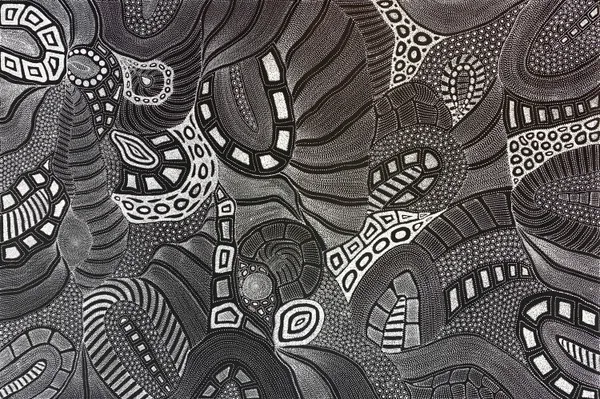
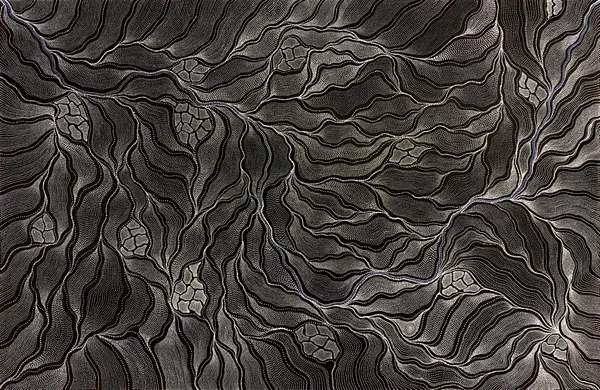
Over her long career she has had many stylistic outputs, all reflecting aspects of her culture - but it is her meticulously painted black and white artworks that have garnered much acclaim. In these paintings, Anna perfectly places small white dots to depict the sand hills, salt lakes and waterholes of her country from an aerial point of view. Anna is widely celebrated for these visual rhythms; and all through the repetition of a single dot.
Anna is a sought-after artist and highly regarded due to her intricate and contemporary painting style. In 2002 Anna exhibited alongside her mother at Hogarth Galleries in Sydney, and further solo exhibitions followed at Mbantua Gallery in Alice Springs (2004), Japingka Gallery in Perth (2006 and 2008) and Hogarth Galleries (2009). She was a selected entrant in the 15th National Aboriginal and Torres Strait Islander Art Award in 1998, and her work is held in collections including Artbank, the Art Gallery of South Australia, the Art Gallery of Western Australia, the Queensland Art Gallery, the Powerhouse Museum and the Museum and Art Gallery of the Northern Territory, as well as the Holmes à Court and Kerry Stokes collections.
-
 Anna Pitjara (Petyarre)My Mother's Country, 2024121 x 183 cm
47 5/8 x 72 inchesacrylic on linenPLEASE ENQUIRE FOR PRICE -
Anna Pitjara (Petyarre)My Country, 2019116 x 180 cm
45 5/8 x 70 7/8 inchesacrylic on linenSold